
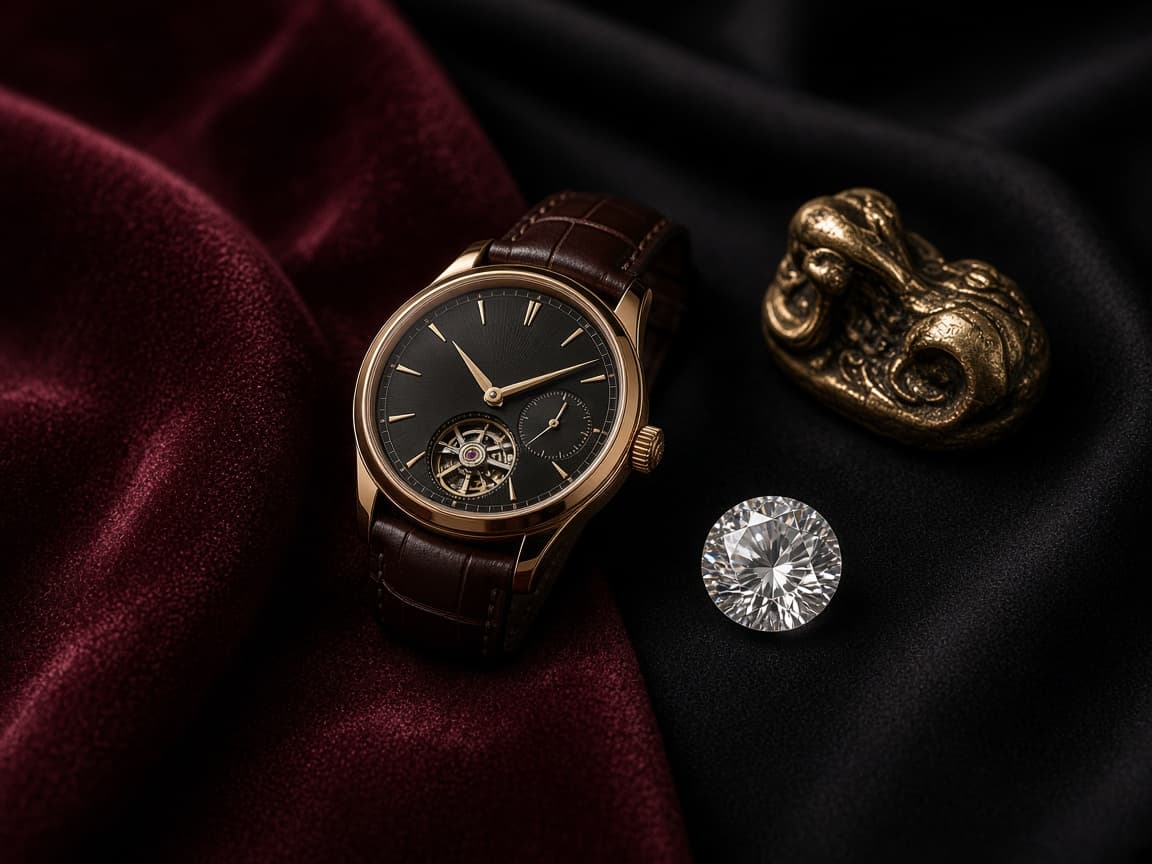
02 · Auction consignment
Consign valuable objects when market exposure fits the piece.
Auction consignment can suit distinctive jewelry, watches, coins, and art where competitive bidding may help — with written terms covering estimates, reserves, fees, and settlement. It is slower than a private purchase and never a guaranteed sale.
What consignment means
You retain ownership until the lot sells under agreed terms.
With auction consignment, suitable property is catalogued and offered through a sale process. You remain the owner until a sale closes under the consignment agreement. Payment follows settlement — after the buyer pays and agreed seller charges are deducted — not the day the hammer falls.
- Written consignment terms before cataloguing moves forward
- Estimate range for guidance — not a promised hammer price
- Confidential reserve discussion when a minimum is appropriate
- Settlement after the sale closes, subject to the agreement
Documented offers follow physical inspection — never a slogan.
When consignment fits
Best for pieces that benefit from competitive interest.
Consignment is rarely the fastest path. It tends to fit objects with clear demand, strong presentation potential, and owners who can wait through intake, cataloguing, the sale, and settlement. Commodity scrap gold usually belongs in the Gold folio, not this route.
- Signed, period, or distinctive fine jewelry and diamonds
- Luxury watches with secondary-market demand and clean presentation
- Rare coins or currency where grade and rarity support bidding interest
- Fine art and objets with maker, provenance, or category depth
Fees, reserves, and timeline
Read the agreement for net proceeds — not just the estimate.
Seller’s commission, possible photography or cataloguing charges, insurance while in care, withdrawal rules, and unsold-lot procedures all affect what you receive. A reserve is a confidential minimum below which the lot should not sell; it is typically discussed relative to the low estimate. Timelines often run weeks to months from acceptance to settlement.
- Seller’s commission and any itemized charges in writing
- Reserve policy, estimate range, and what happens if bidding stops short
- Withdrawal, storage, and return terms for unsold property
- Settlement timing after the buyer completes payment
Compared with direct purchase
Exposure and upside vs speed and a known offer.
Direct purchase after inspection trades market-runway uncertainty for a documented offer and clearer timing when accepted. Consignment keeps ownership longer and may reach a broader bidding audience, but sale and price are not guaranteed. Many owners start with a preliminary estimate, then choose the route that matches timing and risk tolerance.
- Consignment — longer runway, competitive exposure, fees and settlement after sale
- Direct purchase — inspection-first offer when the piece fits purchase criteria
- Neither path promises “top dollar” or a formal appraisal opinion
Questions
Clear answers before you schedule.
- Is auction consignment the same as selling to a dealer?
- No. In consignment you typically remain the owner until the lot sells under the agreement. A direct purchase is a sale of the object to the buyer after inspection and accepted terms.
- What is a reserve price?
- A reserve is a confidential minimum below which the lot should not sell, when one is agreed. It is discussed as part of consignment terms and is not a guarantee that bidding will reach that level.
- How long does consignment take?
- Plan for intake, cataloguing, the sale calendar, and settlement after the buyer pays. Many consignments span weeks to months; direct purchase is usually the shorter path when available.
- What if my item does not sell?
- Unsold lots are handled under the written agreement — often return, after-sale discussion, or another agreed option. Ask for those terms before you consign.
Next step
Request a Preliminary Estimate
Appointments are by arrangement at our Las Vegas office.